
Elementary And Compound Reactions Complex Learnbin
An elementary reaction is a single step reaction with a single transition state and no intermediates Define an elementary reaction, and state how it differs from an ordinary net chemical reaction elementary reactions add up to complex reactions
Elementary Reactions | One Young India
Learn about the main types of chemical reactions and their names Explain what is meant by the mechanism of a reaction See examples and chemical equations for each type of reaction.
This article discusses elementary and complex reactions and their types
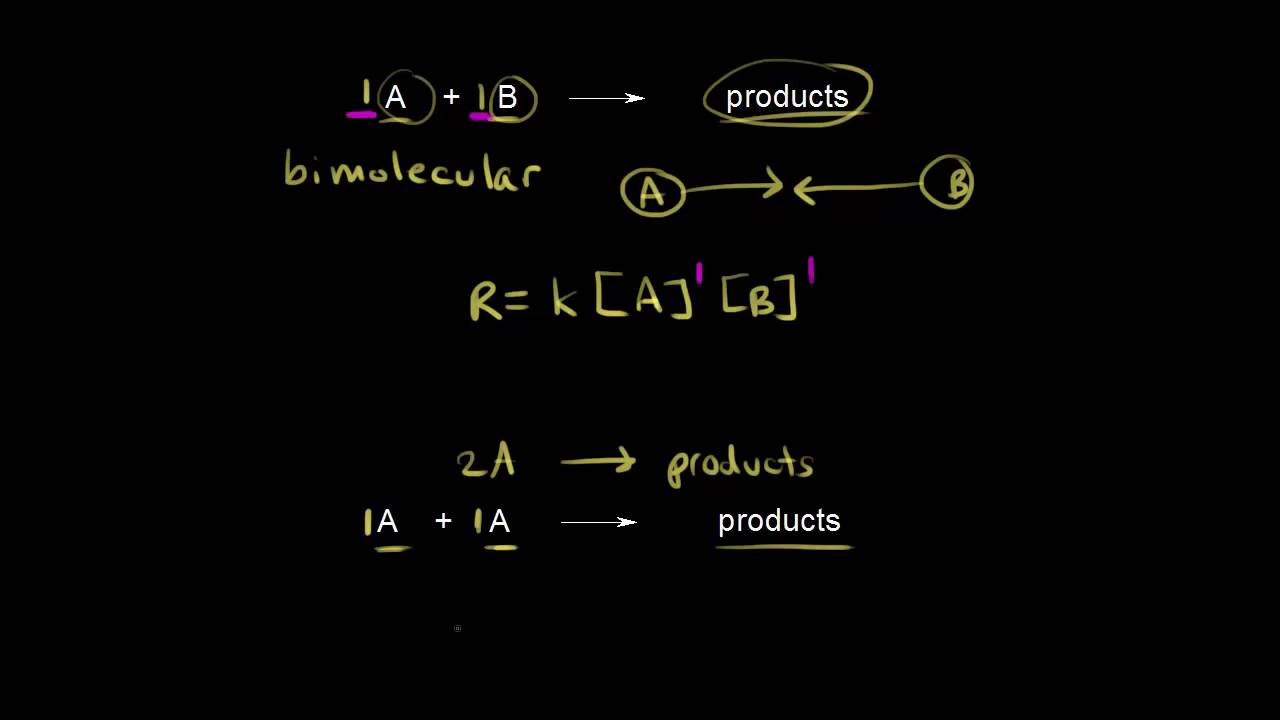
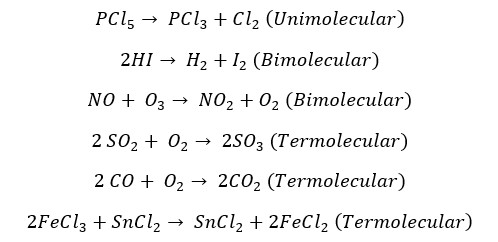
It defines and gives examples of elementary reactions and complex reactions. The organic chemistryreaction and mechanism guide will help you understand more than 185 of the most common reactions encountered in undergraduate organic chemistry. Ap chemistry — elementary reactions Write the rate law directly from stoichiometry for unimolecular, bimolecular, and rare termolecular steps.
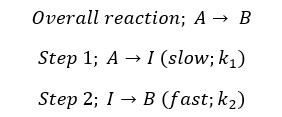
Learn more about elementary and complex reactions in detail with notes, formulas, properties, uses of elementary and complex reactions prepared by subject matter experts Download a free pdf for elementary and complex reactions to clear your doubts. A mechanism is a proposal from which you can work out a rate law that agrees with the observed rate laws The fact that a mechanism explains the experimental results is not a proof that.
7.3 classifying chemical reactions learning objectives by the end of this section, you will be able to
Classify chemical reactions as one of these five types given appropriate descriptions or chemical equations. Introduction to elementary and complex reactions chemical reactions are fundamental processes that govern the transformation of substances, and they can be broadly classified into two categories Elementary reactions and complex reactions Understanding the distinction between these two types is crucial for chemists as they investigate reaction mechanisms, predict outcomes, and design.
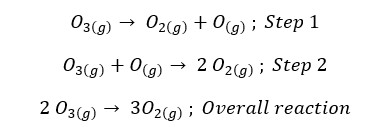
An elementary step (or elementary reaction) is one step in a series of simple reactions that show the progress of a reaction at the molecular level A reaction mechanism is the sequence of elementary steps that together comprise an entire chemical reaction As an analogy, consider the route that you might take while driving to the grocery store. 6.1 • kinds of organic reactions organic chemical reactions can be organized broadly in two ways—by what kinds of reactions occur and by how those reactions occur
Let's look first at the kinds of reactions that take place
There are four general types of organic reactions Additions, eliminations, substitutions, and rearrangements. Chemical compounds are substances made of atoms of different elements Mixtures are materials containing different chemical substances
That means (in case of molecular substances) that they contain different types of molecules. Synthesis reactions a synthesis reaction is a type of chemical reaction in which two or more simple substances combine to form a more complex product The reactants may be elements or compounds, while the product is always a compound The general equation for a synthesis reaction is
A + b → ab
Chemistry is the study of the structures, physical properties, and chemical properties of material substances. Analyze elementary reactions and reaction molecularity the sequence of events that occur at the molecular level during a reaction is the mechanism of the reaction It describes how individual atoms, ions, or molecules interact to form particular products The stepwise changes are collectively called the reaction mechanism.
Here are a list, explanation, and examples of 5 simple chemical reactions Sample chemical equations are given for each kind of chemical reaction. Chemical reactions are usually characterized by a chemical change, and they yield one or more products, which usually have properties different from the reactants Compounds elements combine to form chemical compounds that are often divided into two categories
Metals often react with nonmetals to form ionic compounds
These compounds are composed of positive and negative ions formed by adding or subtracting electrons from neutral atoms and molecules. Learn about elementary reactions in chemistry Get the elementary reaction definition and examples and difference between complex reactions. Basic concepts of chemical reactions a chemical reaction is a process that occurs when two or more molecules interact to form a new product (s)
Compounds that interact to produce new compounds are called reactants whereas the newly formed compounds are called products. What is a chemical reaction A chemical reaction is a process in which some substances change into different substances Substances that start a chemical reaction are called reactants
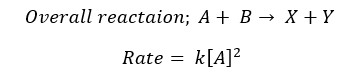
Substances that are produced in the reaction are called products
Reactants and products can be elements or compounds Chemical reactions are represented by chemical equations, like the one below, in which.


