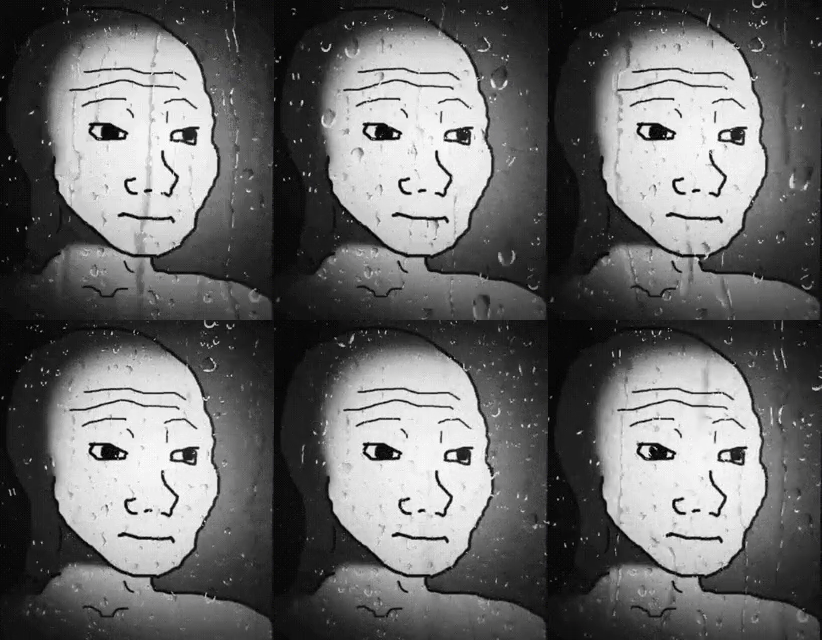
The Ultimate Guide To Reaction Pictures And Meme Faces: The Language Of Digital Expression
Have you ever found yourself scrolling through social media and coming across a perfectly timed meme face that captures exactly how you feel? Or perhaps you've spent minutes searching for that one reaction picture that says "I'm done" better than words ever could? In today's digital world, reaction pictures and meme faces have become the universal language of online communication, transcending cultural barriers and expressing emotions in ways text simply cannot.
From the iconic Distracted Boyfriend to the relatable Woman Yelling at Cat, these visual expressions have revolutionized how we interact online. They've become so ingrained in our digital culture that sometimes a single image can convey more meaning than an entire paragraph. Whether you're reacting to bad news, celebrating a victory, or just expressing mild annoyance, there's a meme face for every situation.
But what makes these reaction pictures so powerful? Why have they become such an integral part of our online conversations? In this comprehensive guide, we'll explore everything you need to know about reaction pictures and meme faces—from their origins to how you can create and use them effectively. So, are you ready to dive into the fascinating world of digital expression?
The Evolution of Reaction Pictures and Meme Faces
Reaction pictures and meme faces didn't just appear overnight. Their evolution traces back to the early days of internet forums and message boards, where users needed quick ways to express emotions without typing lengthy responses. The journey from simple emoticons to today's sophisticated meme faces is a testament to how digital communication has transformed over the years.
The Early Days: From Emoticons to Rage Comics
The story begins with basic emoticons—those simple combinations of punctuation marks that created faces like :) and :(. These early attempts at visual expression laid the groundwork for what would come next. As internet speeds improved and image sharing became easier, communities like 4chan and Reddit began creating more complex visual content.
The Rage Comics phenomenon in the early 2010s marked a significant turning point. These simple, pixelated comics featuring characters like Forever Alone, Trollface, and Me Gusta became incredibly popular because they were easy to create and highly relatable. Anyone could make a Rage Comic using basic tools, and the community-driven nature of these memes meant they evolved rapidly.
The Rise of High-Quality Meme Faces
As social media platforms grew, so did the sophistication of meme faces. The introduction of high-resolution images, better editing tools, and faster internet connections allowed for more detailed and expressive reaction pictures. Memes like Drake Hotline Bling, Expanding Brain, and Woman Yelling at Cat became cultural touchstones because they were visually appealing and universally relatable.
The rise of mobile technology also played a crucial role. With smartphones in everyone's pockets, creating and sharing reaction pictures became instantaneous. Apps like Instagram, TikTok, and Snapchat further accelerated this trend by making visual content the primary form of communication.
The Current State of Meme Culture
Today, reaction pictures and meme faces are more than just entertainment—they're a form of cultural currency. They help define in-groups, create shared experiences, and even influence political discourse. The speed at which memes spread and evolve has created a dynamic ecosystem where new reaction faces emerge daily, while classic ones remain timeless.
Most Popular Reaction Pictures and Their Origins
Some meme faces have achieved legendary status in the world of online reactions. These iconic images have become so recognizable that they often transcend their original context to represent broader emotions or situations.
The Distracted Boyfriend: A Study in Modern Relationships
Perhaps no meme face has been more versatile than the Distracted Boyfriend. This stock photo featuring a man looking back at another woman while his girlfriend looks on in anger has been used to represent everything from political ideologies to consumer preferences. The beauty of this meme lies in its simplicity—it's a visual metaphor for distraction, temptation, and the choices we make.
The original photo was taken by Antonio Guillem in 2015 and uploaded to stock photo sites. Little did he know it would become one of the most used meme templates in history. The image's success lies in its ability to be easily captioned and adapted to countless scenarios, making it endlessly relatable.
Woman Yelling at Cat: The Perfect Duo
One of the most successful recent meme faces combines two separate images: a woman screaming in anger (from a Real Housewives of Beverly Hills episode) and a confused-looking cat sitting at a dinner table. This combination creates a perfect visual representation of one person being dramatically upset while another is completely baffled by the situation.
What makes this meme so effective is the stark contrast between the two images and the way they can be captioned to represent any disagreement or misunderstanding. It's particularly popular for representing arguments where one party is overreacting while the other is confused.
Expanding Brain: From Simple to Enlightened
The Expanding Brain meme uses a series of images showing brains of increasing complexity to represent the progression from simple to complex thinking. This meme face has been used to satirize everything from conspiracy theories to consumer choices, making it incredibly versatile.
The format works so well because it taps into our desire to appear intelligent while also acknowledging that sometimes the simplest solution is the best. It's a perfect example of how meme faces can be used to make nuanced observations about human behavior and decision-making.
How to Create Your Own Reaction Pictures
Creating effective reaction pictures isn't just about finding a funny image—it's about understanding what makes a meme face successful and how to adapt it to your specific needs. Whether you're creating content for social media, a blog, or just for fun with friends, here's how to craft the perfect reaction picture.
Finding the Right Image
The foundation of any great reaction picture is the right image. Look for photos that clearly show an emotion or reaction—surprise, anger, confusion, joy, or disgust are all good starting points. The expression should be exaggerated enough to be easily recognizable even at small sizes.
Stock photo sites like Unsplash, Pexels, and Pixabay offer high-quality images that can be used freely. Alternatively, you can take your own photos or screenshots from videos. The key is finding an image with a clear focal point and good composition.
Adding the Perfect Caption
Once you have your image, the caption is what transforms it from a simple photo into a reaction picture. The best captions are concise, relatable, and add context to the image. They should enhance the emotion already present in the photo rather than contradict it.
Consider using text placement to guide the viewer's eye. Typically, captions go at the top or bottom of the image, but you can get creative with placement if it serves the joke or message. Use fonts that are easy to read and contrast well with the image.
Tools and Software for Creation
You don't need expensive software to create great reaction pictures. Free online tools like Canva, Meme Generator, and even basic photo editors on your phone can produce professional-looking results. For more advanced editing, tools like Photoshop or GIMP offer greater control over text placement, effects, and image manipulation.
Mobile apps like Mematic, Imgur, and Quick Meme make it easy to create and share reaction pictures on the go. These apps often include templates and easy sharing options that streamline the creation process.
The Psychology Behind Meme Faces
Why do we respond so strongly to reaction pictures and meme faces? The answer lies in the psychology of visual communication and our brain's natural tendency to recognize and respond to facial expressions.
The Power of Visual Communication
Humans are inherently visual creatures. We process images much faster than text—research suggests we can process visual information in as little as 13 milliseconds. This speed makes reaction pictures incredibly effective for quick communication, especially in our fast-paced digital environment.
Facial expressions are also universally recognized across cultures, which is why meme faces can transcend language barriers. A picture of someone looking surprised or angry conveys the same basic emotion regardless of where you're from, making these reactions truly global.
Emotional Contagion and Meme Faces
When we see someone expressing an emotion in a reaction picture, we often experience a similar emotion ourselves. This phenomenon, known as emotional contagion, is why watching someone laugh can make us smile, or seeing an angry face can make us feel defensive. Meme faces leverage this natural human response to create immediate emotional connections.
The exaggerated expressions in many meme faces also play into this. By amplifying emotions, these images create stronger reactions in viewers, making the communication more effective and memorable.
The Role of Relatability
The most successful meme faces tap into shared experiences and emotions. When we see a reaction picture that perfectly captures how we feel about a situation, it creates a sense of connection with others who understand that feeling. This relatability is what makes certain meme faces endure while others fade quickly.
Reaction Pictures in Different Social Media Platforms
Different social media platforms have developed their own unique cultures around reaction pictures and meme faces. Understanding these nuances can help you use them more effectively across various platforms.
Twitter: The Fast-Moving Meme Ecosystem
Twitter has become one of the primary platforms for meme face culture. The platform's fast-paced nature and character limits make visual reactions particularly valuable. Twitter users often create and share reaction pictures in real-time, responding to current events with perfectly timed memes.
The platform's quote-tweet feature has also created a unique meme culture where reaction pictures are used to comment on or respond to other tweets. This creates a chain of visual communication that can spread rapidly through the network.
Instagram: The Visual Showcase
Instagram's focus on high-quality visuals has influenced how reaction pictures are created and shared on the platform. While Twitter memes might be quick and simple, Instagram reaction content often features more polished editing, creative text placement, and artistic elements.
Instagram Stories have also created a new format for reaction pictures, with users creating short, ephemeral content that disappears after 24 hours. This has led to a more casual, experimental approach to meme creation on the platform.
Reddit: The Meme Laboratory
Reddit communities, particularly subreddits dedicated to specific interests or meme formats, serve as testing grounds for new reaction pictures. These communities often refine and perfect meme formats before they spread to other platforms.
The upvote/downvote system on Reddit also means that only the most effective and relatable reaction pictures gain traction, creating a natural selection process for meme quality. Many of today's most popular meme faces originated in Reddit communities before spreading to mainstream social media.
The Future of Reaction Pictures and Meme Faces
As technology continues to evolve, so too will the world of reaction pictures and meme faces. Several trends are shaping the future of this visual communication medium.
AI-Generated Content
Artificial intelligence is already being used to create and modify meme faces, and this trend is likely to accelerate. AI tools can generate custom reaction pictures based on text descriptions, create variations of existing memes, or even animate static images to add new dimensions to reaction content.
While some worry that AI-generated content might dilute the authenticity of meme culture, others see it as a tool for democratizing meme creation, allowing more people to participate in visual communication.
Augmented Reality and Filters
AR technology is already being used to create interactive meme experiences, and this is likely to expand. Imagine reaction filters that can map your facial expressions onto popular meme faces in real-time, or AR environments where meme characters appear in your physical space.
These technologies could create new forms of interactive meme content that blur the line between creator and audience, making reaction pictures more immersive and personal.
The Evolution of Visual Language
As reaction pictures become more sophisticated, they may develop their own grammar and syntax. Just as written language has rules for sentence structure, meme faces might develop conventions for how different images are combined, how text is formatted, and how sequences of images tell stories.
This evolution could lead to reaction pictures becoming an even more nuanced and powerful form of communication, capable of expressing complex ideas and emotions with greater precision.
Conclusion
Reaction pictures and meme faces have transformed from simple internet jokes into a sophisticated visual language that millions use every day. They've become an essential part of how we communicate online, allowing us to express complex emotions and ideas quickly and effectively. From the early days of Rage Comics to today's AI-enhanced creations, the evolution of meme faces reflects our changing digital culture and our constant need for better ways to connect with each other.
As we look to the future, it's clear that reaction pictures will continue to evolve alongside technology and culture. Whether through AI generation, AR integration, or new forms of visual storytelling, these digital expressions will remain a vital part of how we share our experiences and emotions online. The next time you use a meme face to react to something, remember that you're participating in a rich tradition of visual communication that's still in its early stages—and the best is yet to come.
So, what's your favorite reaction picture? Have you created any meme faces that went viral? The world of digital expression is always hungry for new content, so why not create something that might become the next big reaction picture? After all, in the ever-changing landscape of online communication, today's simple reaction could become tomorrow's cultural phenomenon.